4 of 14
The edge
4 · The Rest
Four of Swords
This stage
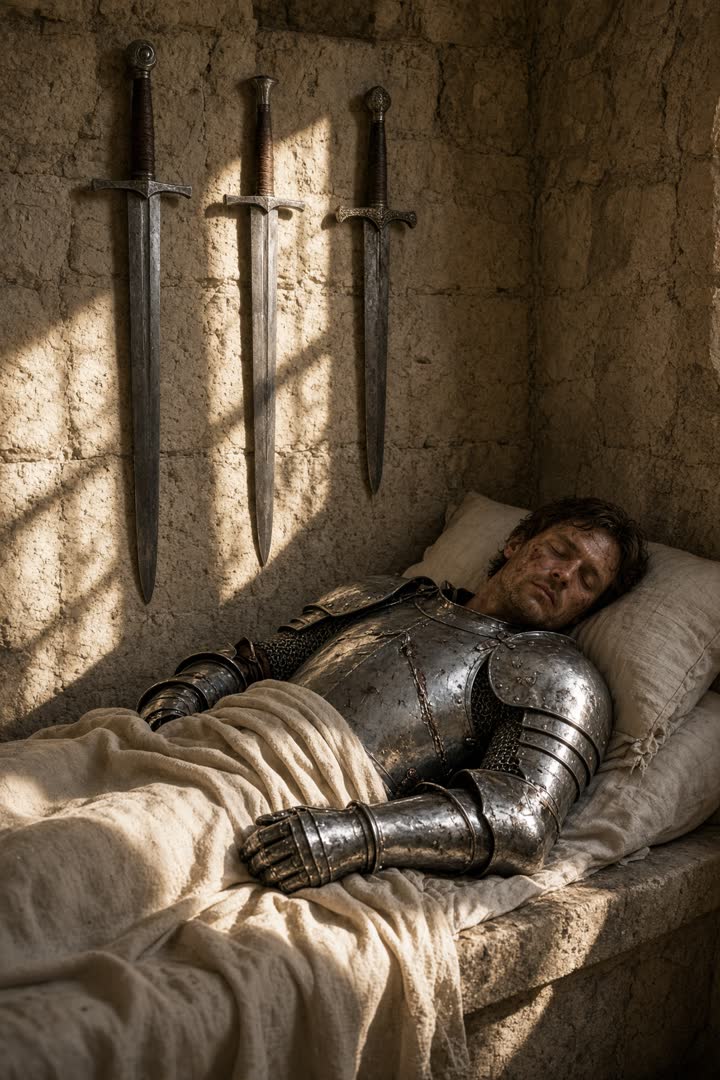
A figure on a tomb, three swords hung up. Recovery as a posture. You do not have to hold the fight tonight.
How we got here
The Three was pain. The Four is the sick day after.
Where this leads
Rest that returns to a mean little win is the Five. Check your face.
Upright
rest · recovery · putting the sword down
A knight lies on a tomb, three swords on the wall, one along the side, stained glass above. The mind needs a Sabbath: this is not death, it is sanctioned stillness after a fight. Close the door, sleep, and let the nervous system put its weapons on the rack; insight will keep.
Reversed
restlessness · rest as avoidance · refusing the still
You are lying down and still fencing, or using rest as a way not to return to life. Four reversed asks you to tell those apart: a walk, a nap, a week off — then a reentry. Recuperation is a strategy; disappearance is a different card.
On the card
The tomb
Rest as a sacred pause. Recovery, not death.
Three swords on the wall
The fight is hung up. You do not have to hold it tonight.
Folded hands
A body allowed to stop. Healing is a posture.
When it shows up
This looks like the nap, the sick day, the retreat after the argument.
History
Smith set a recumbent figure as if on a church tomb, hands in prayer, a stained-glass window of a saint above. Waite’s Four is retreat and convalescence — the mind sheathed. Swords, being air and strife, earn this Sabbath. The single sword beside the tomb is rest, not surrender of the whole war.
If you want to sit with it
What would it mean to put the swords on the wall until morning?
Optional. Nothing is saved.
Get up when you can. Do not pick a hollow victory on the way out.