
10 of 14
The night
10 · The End of the Story
Ten of Swords
This stage
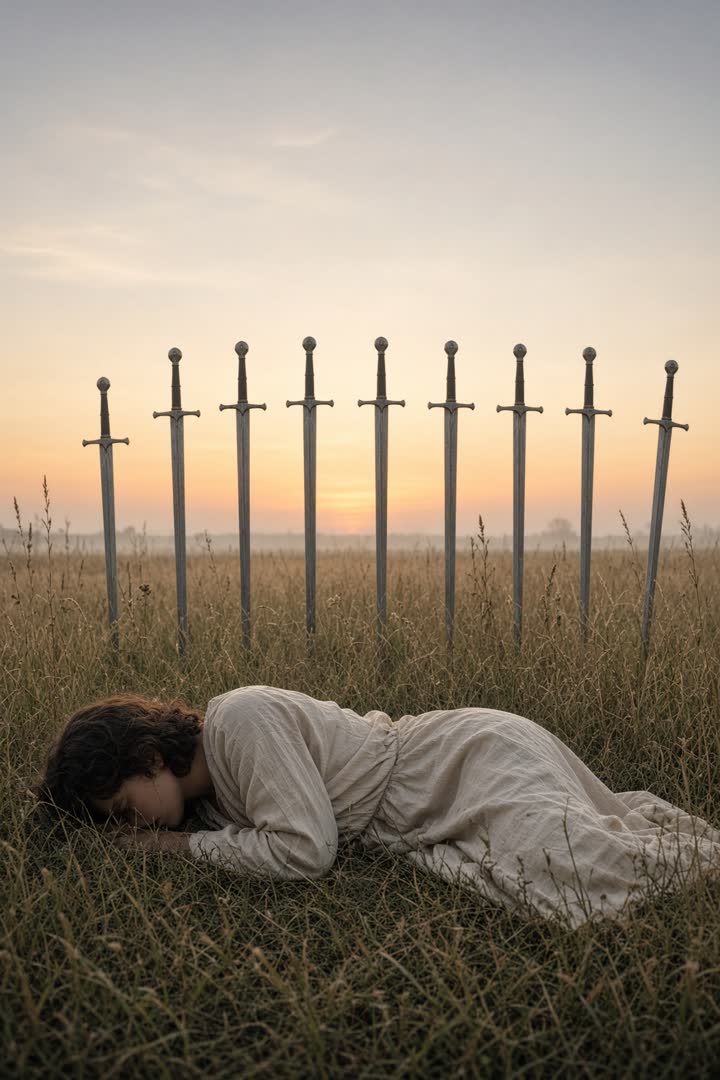
Ten swords, overkill, a sun already rising. The drama is behind. What remains is a body and a day. Get up from the decorating of the ending.
How we got here
The Nine was rumination. The Ten is the actual bottom, and the morning that did not ask permission.
Where this leads
After the story ends, the suit becomes people. The Page is a beginner mind with an edge.
Upright
an ordeal completed · rock bottom with a sunrise · nothing more to pierce
A figure face-down, ten swords in the back, and — look — a dawn on the horizon, still water, mountains. This is the end of a way of hurting: grim, and also over. You do not have to get up singing; you can notice that the night did not get an eleventh sword, and tomorrow is already tinting the sky.
Reversed
the ordeal lingering · refusing the dawn · a cycle of crisis
The sun is up and you are still counting blades, or crisis has become the only weather you trust. Ten reversed is a cycle that wants a true last time, so crawl toward help. The dawn in the picture is not a metaphor you have to earn; it is already painted in.
On the card
Ten swords
A finished worst-case. Overkill. The story has ended.
The dawn
A sun already under the horizon. Morning does not wait for permission.
Still water
The drama is behind. What remains is a body and a day.
When it shows up
This looks like hitting the actual bottom of a thought-spiral, then noticing you are still here.
History
Smith’s prone figure is pierced by ten swords against a black sky that breaks to yellow along the far water. Waite insisted on the sunrise: the worst of the suit, and its ending. Air’s conflict cannot go past ten. The card is ordeal as a completed form, which is why readers also call it a dark mercy.
If you want to sit with it
What ending are you still decorating — and what would getting up from it look like?
Optional. Nothing is saved.
Stand. Then ask the next honest question.